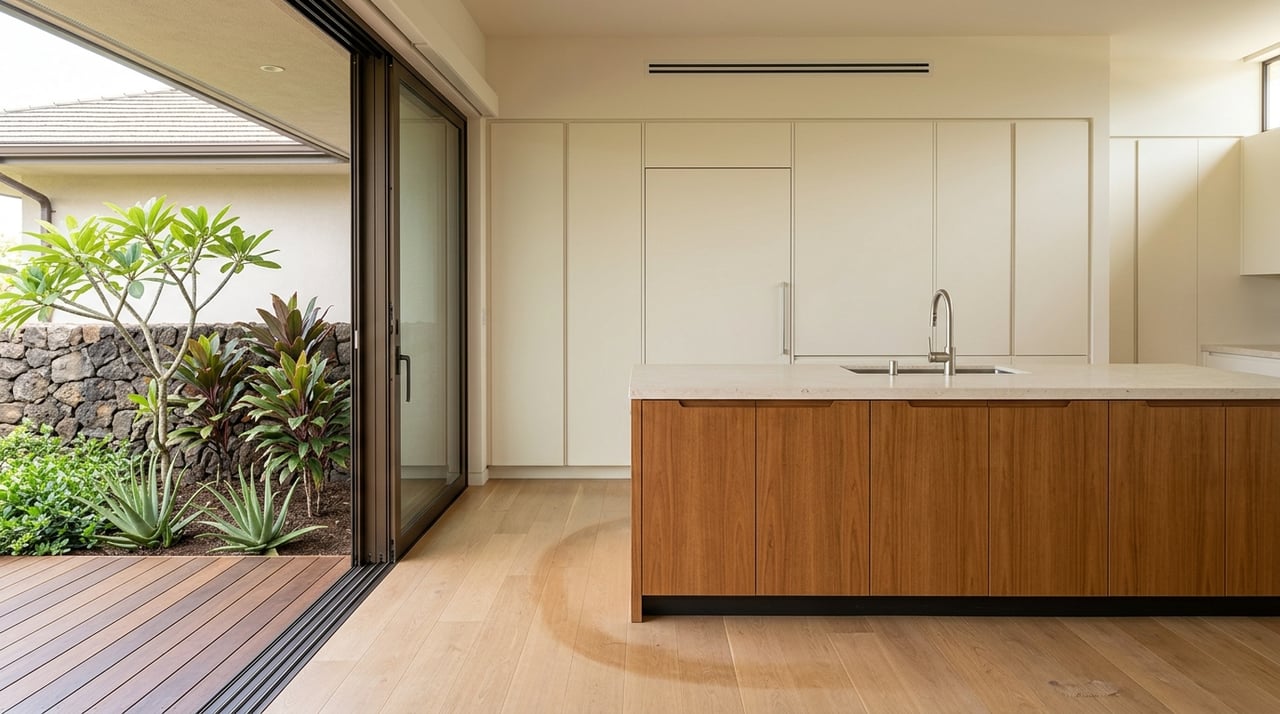
How To Buy A Home In Kukio Resort With Confidence
Lailan Bento June 25, 2026
Lailan Bento June 25, 2026
If you are thinking about buying in Kukio, you are not shopping a typical Big Island neighborhood. You are stepping into a private club community where property value, access, and ownership experience can be shaped by membership terms, recorded rules, and parcel-specific details. The good news is that when you know what to verify before you write an offer on Kukio real estate, you can move forward with far more clarity and confidence. Let’s dive in.
Kūkiʻo Golf and Beach Club is a private, residential equity club on the Kona-Kohala coast next to the Four Seasons Hotel. For buyers searching through Kona homes for sale, this community includes world-class amenities such as a Beach Club, spa and fitness facility, dining pavilion, beach bar, Outdoor Pursuits program, a 10-hole Tom Fazio short course, and an 18-hole Tom Fazio championship course.
That private-club structure matters because Kukio does not function like a standard subdivision. Amenity access, use rights, and resale value can be tied to neighborhood membership and recorded community rules. As a buyer, you want to understand not just the home itself, but also exactly what ownership gives you.
Kukio is also an ultra-luxury, low-volume market. Official inventory shows homes and homesites priced in the multimillion-dollar range, which means many buyers focus heavily on long-term ownership planning, document review, and privacy.
One of the first steps is knowing what type of property you are actually buying. The official inventory is generally organized into Homes, Cottages, and Homesites, and each path comes with a different ownership experience.
A finished home is usually the most straightforward option if your goal is immediate use. You can evaluate the floor plan, finishes, location, and existing rights more directly because the residence is already built.
That said, you still need to confirm what transfers with the property. In Kukio, club-related benefits and use rights may not be identical from one listing to another.
Cottages can offer a different lifestyle and footprint than a larger estate home. For some buyers, that means less property to maintain while still enjoying a resort-community setting.
Confidence here comes from reviewing the same core items you would review with any purchase in Kukio: title, recorded rules, fees, and membership terms. Smaller property size does not mean simpler documents.
Homesites require the most patience and planning. When looking at Kona land for sale within Kukio, official lot disclosures state that plans must be approved through design review before construction can begin.
That means your timeline to actual use may be much longer than your closing timeline. If you want to build, you should plan for design work, approvals, county permitting, and construction before occupancy becomes a reality.
This is one of the most important parts of buying in Kukio with confidence. Membership treatment can vary by parcel, and buyers should not assume that every property includes the same rights.
Official Kukio pages indicate that some homesites include membership, while other lot disclosures say the buyer may receive only an invitation to apply for club membership rather than an automatic transfer. The broader community description also states that membership is exclusive to residents of Kūkiʻo, Maniniʻōwali, and Kaʻūpūlehu.
The practical takeaway is simple: get the exact membership terms in writing. Before you move forward, confirm whether the property includes membership, an invitation to apply, or another transfer structure.
The official Kukio site tells buyers to obtain the Property Report and similar documentation before signing anything. That advice lines up with guidance when buying luxury real estate on the Big Island, where developer public reports disclose material facts such as building restrictions, maintenance fees, reserve funds, easements, utilities, water rights, zoning, land use, development rights, and future master plans.
In a community like Kukio, these documents are not just paperwork. They help you understand how the property can be used, what costs may continue after closing, and whether your long-term plans match the parcel you are considering.
The Hawaiʻi Real Estate Branch says a title report is indispensable for identifying easements, covenants, conditions and restrictions, agreements, and liens. In a resort community, those recorded items can directly affect privacy, access, building options, and future value.
You should also confirm with the county permitting and zoning office that your intended use is permissible. This is especially important if you are buying a homesite, planning future improvements, or evaluating a property with a specific use in mind.
A clean-looking listing can still come with layered obligations in the recorded documents. Buying with confidence means understanding those details before your contingency periods expire.
Kukio buyers often compare options across Kūkiʻo, Kaʻūpūlehu, and Maniniʻōwali. Each area has its own property mix and setting, so it helps to evaluate them based on your goals rather than assuming they offer the same ownership experience.
The official neighborhood pages show that the Kūkiʻo core contains most of the club amenities. Kaʻūpūlehu is described as a private oceanfront community with one-acre homesites and a beach club. Maniniʻōwali includes villa lots, larger estate parcels, and a sports complex.
Area | General character | Key buyer consideration |
|---|---|---|
Kūkiʻo | Core club community | Proximity to main amenities |
Kaʻūpūlehu | Private oceanfront setting | Parcel-specific membership language |
Maniniʻōwali | Mix of villa lots and estate parcels | Land size and sports complex access |
Because buyers often compare Kukio with other ultra-luxury West Hawaiʻi club communities, your decision usually comes down to how you want to use the property, how quickly you want to enjoy it, and how much customization you want.
Kukio’s official site notes that some homes for sale may not be publicly listed. In a market with low inventory and high privacy, that matters.
This can affect both your search strategy and your timing. If you rely only on publicly visible listings, you may miss options that better fit your goals.
That is one reason local, community-specific representation can be so valuable in Kukio. Relationship-based and specialized expertise underscores how this market functions.
In Hawaiʻi County, real property is assessed as of January 1 for a tax year that runs from July 1 to June 30. The county classifies property based on highest and best use into classes that include residential, homeowner, long-term rental, hotel and resort, and others.
If you are buying in Kukio, do not assume a favorable tax classification based on how you hope to use the property. Hawaiʻi County states that the homeowner class is reserved for a principal residence, and the long-term rental class requires a signed lease of six consecutive months or more.
The county also states that no residential property with a net taxable value of $2 million or more qualifies for the long-term rental class. In an ultra-luxury market, that means many buyers should confirm the parcel’s current classification and eligibility before building ownership projections around it.
If you plan to rent the property for periods of less than 180 consecutive days, the Hawaiʻi Department of Taxation states that those rentals are subject to the state transient accommodations tax. Hawaiʻi County also adds its own 3% county transient accommodations tax on taxable short-term rental proceeds.
Long-term rentals are subject to Hawaiʻi income tax and GET, but not TAT. Just as important, you should confirm that the property’s governing documents and community rules allow your intended rental use.
One of the biggest confidence boosters is having the right timeline in mind from the start. A finished residence, cottage, and homesite can each lead to a very different path after closing.
For a completed home, your post-closing timeline may be relatively direct. For a homesite, there may be a meaningful gap between purchase and actual enjoyment because design review and county permitting come before construction.
In Kukio, confidence usually comes from process, not guesswork. The strongest buyers move deliberately, ask direct questions, and line up their due diligence before they get emotionally attached to one property.
A smart approach often includes:
That kind of preparation does more than reduce risk. It also helps you negotiate from a position of knowledge, which is especially important in a private, low-volume market where details can drive value.
If you want clear guidance as you evaluate Kukio, Lailan Bento brings Big Island insight, strong negotiation, and detail-driven support to help you move forward with confidence.

How to Search Smarter and Find the Right Home in Kona, HI.

Romantic and Memorable Ways to Spend an Evening in Kona, HI.
What Kona, HI Buyers Should Plan for Beyond the Purchase Price.
We encourage you and your ‘ohana to reach out to one of our agents or all of our agents because we are always more than happy to help you and your ‘ohana find your next aloha lifestyle home within Hawaii real estate! Our team is always available to do any property search for you to ensure your needs and wants are met.